- Airbus forecasts 1,640 new passenger aircraft for Africa by 2045 as traffic triples
- SAATM Stagnation: Keyamo, Demuren, Sosina to lead discourse at 2026 SAPTCO lecture
- AASA urges immediate execution to unlock Africa’s aviation growth potential
- Defying The Graveyard: How Aero Contractors outlasts Nigeria’s aviation mortality trap
- Unions dismiss AON’s threat to shut operations, accuse Air Peace of taxiway security breach



MMA2: How diplomacy succeeded over litigation

For the Nigerian aviation industry, the end of this imbroglio is more than just a settlement; it is the removal of a sovereign risk tag that has kept international airport investors away from the shores for two decades, writes WOLE SHADARE
For two decades, the Murtala Muhammed Airport Terminal Two (MMA2) stood as both a monument to Nigerian ingenuity and a tombstone for Public-Private Partnerships (PPP). It was a “Cold War” fought not with tanks, but with court injunctions, Supreme Court mandates, and bureaucratic brick walls.


For over two decades, the Nigerian aviation sector was haunted by a ghost: the protracted legal and operational imbroglio between the Federal Government and Bi-Courtney Aviation Services Limited (BASL).
What began as a pioneering Public-Private Partnership (PPP) in 2003—the construction of the Murtala Muhammed Airport Terminal Two (MMA2) devolved into a quagmire of litigation, unpaid debts, and stalled infrastructure.
The BASL’s crisis began even before the firm inked the deal as the second preferred bidder for the project.
The controversy began with the way the contract was awarded. In 2000, after the old domestic terminal was gutted by fire, the Federal Government sought a private developer. The original winner was Sanderton Ventures Limited, not BASL.
However, after Sanderton failed to deliver for a year, the government called up BASL—the “reserve bidder”—to step in. This transition was never fully accepted by certain cadres within the Federal Airports Authority of Nigeria (FAAN), who viewed the arrangement with scepticism from day one.
The Shifting Goalposts (12 vs 36 Years)
The most contentious point was the concession period. FAAN officials insisted the agreement was for a 12-year duration.
Babalakin maintained that, due to the increased scope of the project (building a world-class terminal rather than a simple shed), the presidency under Olusegun Obasanjo and later Umaru Yar’Adua approved an extension to 36 years.
This discrepancy turned a business agreement into a legal war zone, with FAAN accusing BASL of backdoor manoeuvres and BASL accusing the government of bad-faith contract conduct.
However, last Thursday, the Federal Executive Council (FEC) finally approved a comprehensive settlement, marking a watershed moment for Nigerian infrastructure development.
The Cost of Two-Decade Standoff
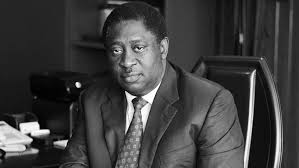
To understand the magnitude of this resolution, one must revisit the scars of the conflict. Since 2003, when Dr Wale Babalakin’s BASL stepped in to rebuild the fire-gutted domestic terminal, the relationship between the concessionaire and the FAAN has been toxic.
The bones of contention were threefold. BASL argued that the GAT (MM1) was part of their concession. The courts agreed, but the government refused to hand it over. A 2009 N213 billion judgment debt awarded to BASL, which, with interest, had ballooned into a fiscal nightmare for the Federation.
Despite being Africa’s first privately funded terminal, MMA2 was denied permission to handle regional flights, costing the operator billions in potential revenue.
Minister of Aviation and Aerospace Development, Festus Keyamo (SAN), leveraging his shared background in the Inner Bar with Babalakin, approached the dispute with a pragmatic lens. The resolution is not a victory for one side, but a survival pact for the industry.
Summary of the give-and-take deal
|
Feature |
Bi-Courtney Concession |
Federal Government Concession |
|
Financials |
Forgave N132bn + Interest debt |
Restored project concessions |
|
Legal |
Dropped exclusivity rights |
Approved regional flight status |
|
Assets |
Handed over MMA1 (GAT) to FG |
Funding apron expansion at MMA2 |
|
Stalled Work |
Must finish the hotel in 24 months |
Shared ownership/revenue model |
A major sticking point was a clause granting Bi-Courtney exclusive rights to operate private airports within a certain radius of Lagos, effectively blocking projects like the proposed Lekki Airport.
Years of litigation culminated in a Supreme Court judgment awarding Bi-Courtney N132 billion in damages, plus interest, against the Federal Government.
The resolution, brokered by Keyamo, was described as a decisive step toward restoring investor confidence. The settlement is built on several high-stakes trade-offs.
In arguably the most significant move, Bi-Courtney agreed to waive the N132 billion judgment debt and all accrued interest.
Minister Keyamo noted that the government simply could not pay such a sum and that the waiver was essential to moving forward.
For years, Bi-Courtney’s request to operate regional (West African) flights was denied. The new agreement finally relocates regional flight operations to MMA2, improving the terminal’s commercial viability and easing congestion at the international terminal.
Bi-Courtney has officially handed over its claims to the Murtala Muhammed Airport Terminal One (GAT) back to the Federal Government.
The exclusivity clause has been removed, clearing the legal path for other private airport developments in Lagos, such as the Lekki Airport project.
The Federal Government has restored Bi-Courtney’s concession for the long-abandoned five-star hotel and conference centre opposite MMA2.
Lessons Learned
The two-decade-long conflict between BASL and FAAN over the MMA2 is perhaps the most significant legal and economic case study in the history of Nigerian infrastructure.

A contract is only as good as the government’s willingness to obey its own courts. The refusal to pay the N132 billion judgment debt for over a decade didn’t just hurt Bi-Courtney; it stunted the growth of the entire aviation sector by scaring away foreign direct investment (FDI).
The dispute over whether the concession was for 12 years or 36 years highlights the danger of moving goalposts.
Infrastructure deals must have ironclad, transparent, and publicly accessible documentation from day one.
In the BASL case, administrative changes between the Obasanjo and Yar’Adua eras led to conflicting interpretations of the increased scope of work, which fueled years of litigation.
In the Nigerian context, legal victories are often pyrrhic without political buy-in. The resolution proved that mediation and high-level diplomacy are often more effective than 20 years of litigation that leaves infrastructure like the abandoned hotel project to rot.
Final line
The resolution of the Bi-Courtney imbroglio is more than just a legal settlement; it is a signal to global investors. For twenty years, the MMA2 dispute served as a cautionary tale of Nigerian PPPs gone wrong.
By resolving this “once and for all,” the administration aims to demonstrate that contracts can be enforced and disputes settled through negotiation rather than endless litigation.
Furthermore, the Federal Government will now begin earning revenue from MMA2 operations for the first time in the concession’s history. This deal, characterised by give-and-take, effectively turns the page on a chapter of acrimony, clearing the runway for a more competitive and modern aviation hub in West Africa.
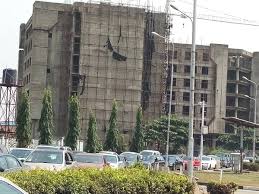
However, the clock is now ticking. Babalakin has 24 months to turn that concrete carcass into a world-class hotel, and FAAN has 24 months to prove it can work as a partner rather than a predator. The burden of MMA2 has been lifted; now, it’s time for the terminal to finally take flight.
Google+